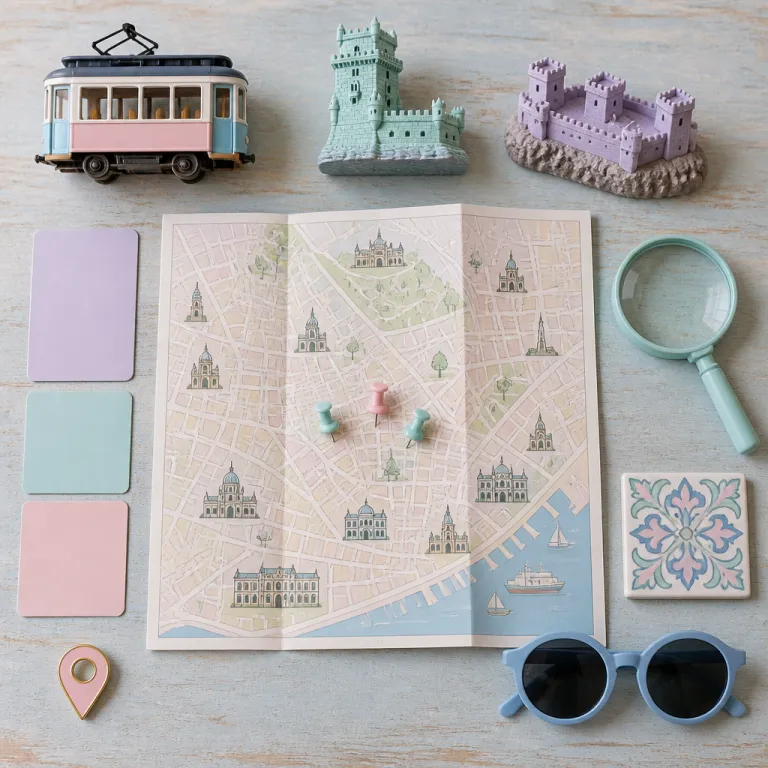
How a lisbon tourist attractions map shapes your hotel choice
Choosing a hotel in Lisbon is far easier when you start with a clear lisbon tourist attractions map rather than with a random list of properties. A well designed sightseeing map of the city shows how close each neighbourhood is to key attractions, which helps you decide whether you prefer to wake up near a museum, a church, or a lively square. For a first visit, staying central places you within walking distance of many of the best sights in Portugal and reduces your reliance on public transport or costly taxis.
Look at any detailed map of Lisbon and you will see how compact the historic core really is, especially around Baixa, Chiado, Rossio Square, and Avenida da Liberdade. When a hotel marks its exact location on a tourist map, you can immediately gauge how long it will take to reach the main attractions, from the Santa Justa lift to the Tagus River waterfront, which is crucial if you only have a short time in the city. Central districts also give you faster access to tram, metro, and bus lines, so you can reach Belém, Parque das Nações, or the botanical garden without wasting a day in transit or feeling rushed.
For many Lisbon tourist stays, the priority is to minimise travel time while maximising experience. A good map Lisbon hotels provide at check in should highlight not only tourist attractions but also practical services such as metro stations, tram stops, and viewpoints, because this combination lets you plan each day with confidence. When you compare hotels, ask to see their printed tourist map or digital map link, as the clarity of this information often reflects how well the property understands the needs of international guests and independent travellers.
Reading the city: where central really means central
On a lisbon tourist attractions map, the truest heart of the city stretches from Praça do Comércio on the Tagus River up to Rossio Square and then along Avenida da Liberdade. Hotels in this corridor place you within a ten to fifteen minute walk of the Santa Justa elevator, the main downtown museum spaces, and several historic church façades that date back centuries. If you prefer to feel the pulse of Lisbon tourist life, this area is usually the best compromise between convenience, atmosphere, and access to public transport at almost any hour.
Baixa and Chiado appear as a tight grid on any tourist map, with the Santa Justa lift linking the lower streets to the higher Carmo area, which is ideal when you want to avoid steep climbs. From a central hotel here, you can visit the ruins of the Convento do Carmo, stroll to the riverfront arcades of Praça do Comércio, and still be back in your room in time to change for dinner, which makes short city breaks feel longer and more relaxed. When you read the map carefully, you will notice how metro stations such as Baixa-Chiado and Rossio sit at the core of the network, giving you direct lines to the airport and to other attractions without complicated transfers.
Chiado and Bairro Alto, just above Baixa, suit travellers who want nightlife close but not overwhelming. On the map Lisbon presents this area as a compact plateau, with viewpoints like Miradouro de São Pedro de Alcântara and Miradouro Santa Catarina overlooking the city and the Tagus River, and these miradouros are marked clearly on most tourist maps. Choosing a hotel within this zone means you can walk to the main sights by day and still retreat to quieter streets at night, which is especially worth considering if you value sleep as much as sightseeing and evening entertainment.
Planning perfect days: using your tourist map as an itinerary tool
A lisbon tourist attractions map is more than a navigation aid; it is the backbone of an efficient itinerary for each day of your stay. Start by circling the attractions you consider non negotiable, such as the Santa Justa elevator, Belém Tower, the Jerónimos Monastery, or a favourite art museum, then group them by proximity on the map. This simple exercise shows you which days are best spent in the historic centre and which should be dedicated to Belém or to the modern riverside area around the Vasco da Gama Bridge and Parque das Nações.
For a classic first full day, many Lisbon tourist visitors focus on Baixa, Chiado, and the Alfama district, all clearly labelled on any tourist map. You might ride the Justa lift in the morning, walk through Rossio Square and up to a church like São Domingos, then continue towards São Jorge Castle, which dominates the city from above and appears as a landmark on every map Lisbon produces. Because these attractions cluster together, a centrally located hotel allows you to return briefly in the afternoon to rest before heading out again to enjoy the evening light over the Tagus River and the illuminated hills.
Another day can be devoted to Belém, which lies west along the river and is always highlighted on a lisbon tourist attractions map. Here you will find Belém Tower, the Jerónimos Monastery, and several art and history museums, all of which were built over different historical periods to celebrate Portugal’s maritime power and cultural heritage. With a Lisboa Card, your public transport to Belém is included, and many of these tourist attractions offer free or reduced entry, making the card especially worth considering if you plan multiple visits in a short time and want to keep costs predictable.
Key landmarks on the map: from churches to towers and gardens
When you unfold a detailed tourist map of Lisbon, certain names appear repeatedly because they anchor the city both visually and historically. The Santa Justa elevator, often called the Justa lift, links Baixa to the higher Carmo area and gives sweeping views over Rossio Square, Praça do Comércio, and the Tagus River, which is why many travellers mark it early when they read the map. Nearby, churches such as São Domingos and São Roque reveal interiors filled with art from several centuries, offering quiet pauses between busier attractions and busy shopping streets.
Along the river in Belém, Belém Tower and the Jerónimos Monastery dominate the lisbon tourist attractions map, and for good reason. Belém Tower was built in the early sixteenth century as part fortress, part ceremonial gateway to the Tagus River, while the monastery commemorates the voyages of Vasco da Gama and houses his tomb, making both sites central to any understanding of Portugal’s Age of Discoveries. These monuments, together with the nearby museum cluster, form a compact zone that is easy to navigate once you understand their relative positions on the map Lisbon tourism offices distribute and hotels often share.
Green spaces also deserve attention when you plan your stay. The botanical garden near Príncipe Real, clearly marked on most tourist maps, offers a calm refuge with exotic species collected over many decades, and it sits within walking distance of many central hotels. Viewpoints such as Miradouro Santa Catarina and Miradouro de São Pedro de Alcântara are usually indicated with small icons on the lisbon tourist attractions map, and visiting them at different times of day lets you appreciate how the light changes across the city and over the river.
Transport, passes, and how maps help you move smoothly
Central hotels matter because they shorten journeys, but a lisbon tourist attractions map combined with a clear understanding of public transport makes the whole city feel accessible. Metro lines, tram routes, and key bus corridors are usually overlaid on the tourist map, allowing you to see how quickly you can reach areas like Belém or Parque das Nações from Rossio Square or Avenida da Liberdade. Many maps also highlight train stations that connect Lisbon to coastal towns, which is useful if you plan a day trip while still basing yourself in the city centre and returning in the evening.
The Lisboa Card functions both as a transport pass and as a cultural key, since it includes unlimited public transport and free or discounted entry to many tourist attractions. When you look at a map Lisbon tourism offices provide, you will often see icons indicating which museums, monuments, and churches accept the Lisboa Card, which helps you calculate whether the card is worth the investment for the length of your stay. For guests staying central, the card’s value increases because you can easily combine several visits in one day without worrying about individual ticket costs or separate metro fares.
Official maps from the Lisbon Tourist Board and from Lisbon Portugal Tourism tend to be the most reliable, especially for up to date transport routes. They are available both as printed tourist maps and as online interactive versions, and many hotels keep a stack at reception for guests to read and take away. Use official maps for accurate information, check for the latest updates before traveling, and combine maps with local guides or hotel recommendations for a comprehensive experience.
Choosing the right central district for your hotel stay
Once you understand the layout of the city through a lisbon tourist attractions map, the choice of district becomes a strategic decision rather than a guess. Baixa and Rossio Square suit travellers who want flat streets, immediate access to metro lines, and very short walks to the Santa Justa elevator, Praça do Comércio, and the riverfront, which is ideal if you have limited mobility or prefer to avoid hills. Avenida da Liberdade, slightly north, offers a more spacious feel with tree lined sidewalks, and it still appears firmly within the central zone on every tourist map and city guide.
Chiado and Bairro Alto appeal to guests who enjoy culture and nightlife, since the area is filled with theatres, galleries, and restaurants yet remains close to the main attractions. On the map Lisbon presents this area as a bridge between Baixa and the higher residential quarters, and the Justa lift or nearby funiculars help you manage the slopes without effort, which can be especially welcome after a long day of sightseeing. From here, you can walk to a museum in the morning, pause at a church or at Miradouro Santa Catarina in the afternoon, and still reach your hotel in minutes for a quick rest.
Alfama, east of the centre, offers a more traditional atmosphere with narrow lanes and views towards São Jorge Castle. While it may sit slightly off the main grid on a lisbon tourist attractions map, many Lisbon tourist visitors find it worth the extra climb or tram ride, especially if they value character over convenience. If you choose to stay elsewhere, plan at least one dedicated day in Alfama, using your tourist map to weave between viewpoints, small museums, and historic churches that reveal the city’s layered past and its strong local traditions.
Key figures to keep in mind when reading your map
- Lisbon welcomed around 4.5 million tourists in 2019 according to municipal tourism statistics, which means central areas around Rossio Square and Praça do Comércio can feel busy at peak times, so booking a hotel within walking distance of attractions helps you explore early or late in the day.
- The Lisbon Tourist Board identifies roughly 50 major tourist attractions across the city, and many of these, including the Santa Justa elevator, Belém Tower, and the Jerónimos Monastery, are clearly highlighted on every official tourist map to simplify planning and route choices.
- Official maps are available year round and are updated periodically, so checking the latest version before your visit ensures that public transport routes and museum information on your lisbon tourist attractions map remain accurate and reflect any recent changes.
- Digital trends show increased use of online interactive maps and mobile applications, which now often integrate real time updates and personalised itineraries, making it easier for hotel guests to adapt their plans during a short stay and avoid unnecessary detours.
FAQ: practical questions about using a lisbon tourist attractions map
Where can I get a reliable Lisbon tourist map near my hotel ?
You can obtain a reliable tourist map at official tourist information centres, many central hotels, and from the Lisbon Tourist Board or Lisbon Portugal Tourism websites. Physical maps are usually available at reception desks, while digital versions can be downloaded before you arrive in the city. Using an official source ensures that attractions, street names, and public transport routes on your map are up to date and easy to follow.
Do Lisbon tourist maps show public transport routes clearly enough for visitors ?
Most official maps include metro lines, main tram routes, and key bus corridors, often with colour coding that matches station signage. This makes it straightforward to see how to travel from central areas like Rossio Square or Avenida da Liberdade to Belém, Parque das Nações, or the airport. Many digital maps go further by offering real time information, which is especially helpful during busy periods or when services are disrupted.
Are there interactive maps for Lisbon attractions that work well on mobile phones ?
Yes, several tourism platforms provide interactive maps that highlight museums, churches, viewpoints, and other attractions, and these tools are optimised for smartphones. You can filter by category, such as art, history, or gardens, and then save locations that interest you near your chosen hotel. This approach turns your phone into a personalised lisbon tourist attractions map that you can consult throughout the day without carrying extra paper.
Do Lisbon tourist maps include information about the Lisboa Card benefits ?
Many official maps mark attractions that accept the Lisboa Card with a small icon or note, making it easier to see where you can use the pass. When you compare the locations of these sites on the map with your hotel’s position, you can quickly judge whether the card is worth buying for the length of your stay. Central hotels usually keep brochures explaining the card’s transport and museum benefits alongside the tourist maps.
Is it better to rely on printed maps or digital maps when staying central in Lisbon ?
Printed maps are excellent for gaining an overview of the city and for planning routes in your hotel room, while digital maps shine when you are already outside and need step by step directions. Many travellers use both, starting with a paper lisbon tourist attractions map to understand neighbourhoods, then switching to a mobile map for precise navigation. As long as both sources are official and current, combining them gives you the most reliable experience and reduces the risk of getting lost.